Home of Africa's Highest Mountain
day hike from$245Per Person
What Is Kilimanjaro National Park?
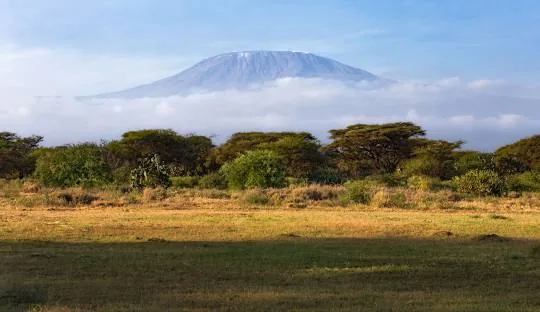
Kilimanjaro National Park protects Mount Kilimanjaro, the highest mountain in Africa at 5,895 m, together with its forests and alpine zones in northern Tanzania. It is a UNESCO World Heritage Site and the starting point for every Kilimanjaro climb. You can visit on a multi-day climb to the summit or on a guided day hike through the rainforest from Marangu Gate.
The mountain is made up of three volcanic cones: Kibo, the highest, with the summit at Uhuru Peak; Mawenzi, a jagged peak at about 5,149 m; and Shira, a collapsed cone forming the Shira Plateau. As you climb, you pass through five climate zones, from farmland and rainforest to alpine desert and the glaciers near the summit.
This page explains the park's zones, gates and routes, what wildlife you may see and when to visit, and covers our Kilimanjaro day hike to Mandara Hut, priced from $245 per person.
Park at a Glance
| Location | Northern Tanzania, near Moshi and the Kenyan border |
|---|---|
| Area | About 1,668 km² |
| Highest point | Uhuru Peak, 5,895 m |
| World Heritage status | UNESCO World Heritage Site since 1987 |
| Main activities | Multi-day summit climbs, day hikes, birdwatching |
| Nearest town and airport | Moshi; Kilimanjaro International Airport (JRO) |
| Guide required | Yes, all visitors must go with a licensed guide |
What Climate Zones Will You See?
Kilimanjaro rises from farmland to arctic conditions, so you pass through five distinct climate zones. The day hike stays in the rainforest, while a summit climb crosses all five.
| Zone | Altitude | What it is like |
|---|---|---|
| Cultivation and lower slopes | About 800–1,800 m | Farms and villages, including coffee and banana farms of the Chagga people. |
| Montane rainforest | About 1,800–2,800 m | Dense, humid forest with colobus and blue monkeys and rich birdlife. |
| Heath and moorland | About 2,800–4,000 m | Open slopes with giant heathers, groundsels and lobelias. |
| Alpine desert | About 4,000–5,000 m | Dry, rocky and windy, with big swings between day and night temperatures. |
| Arctic summit | Above about 5,000 m | Scree, ice and glaciers around Kibo's crater. |
Which Gates and Routes Are in the Park?
Each climbing route starts from its own gate on a different side of the mountain. The gate you start from affects the drive from Moshi, the scenery and how the route is acclimatised.
| Gate | Route | Location | Our packages |
|---|---|---|---|
| Marangu Gate | Marangu Route (huts) | South-east; the usual start for day hikes | 5-Day, 6-Day Marangu |
| Machame Gate | Machame Route | South-west, about an hour from Moshi | 6-Day, 7-Day Machame |
| Londorossi Gate | Lemosho and Shira routes | West, about 2–3 hours from Moshi | 7-Day, 8-Day Lemosho |
| Umbwe Gate | Umbwe Route | South; the steepest route | On request |
| Nalemoru Gate | Rongai Route | North, near the Kenyan border | On request |
| Mweka Gate | Descent only | South; the exit for Machame, Lemosho and Umbwe | Used on our Machame and Lemosho climbs |
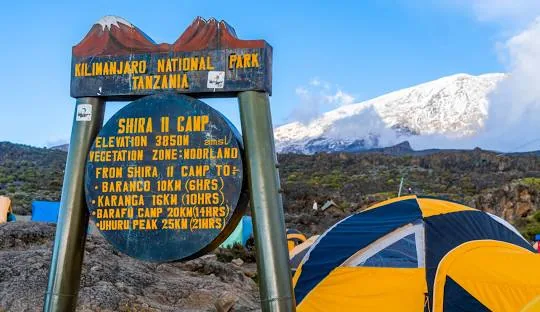
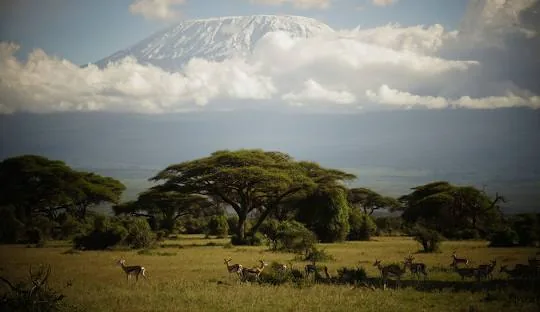
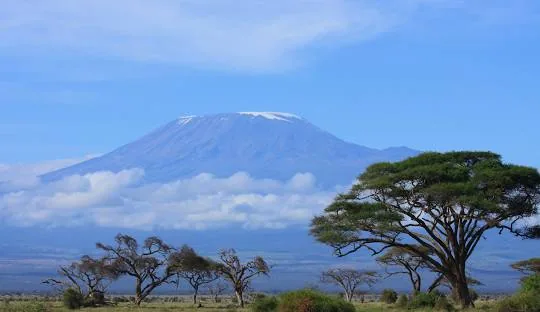
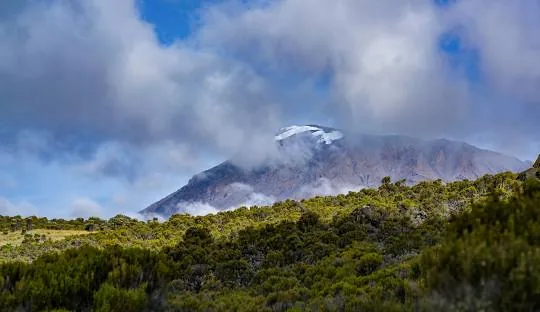
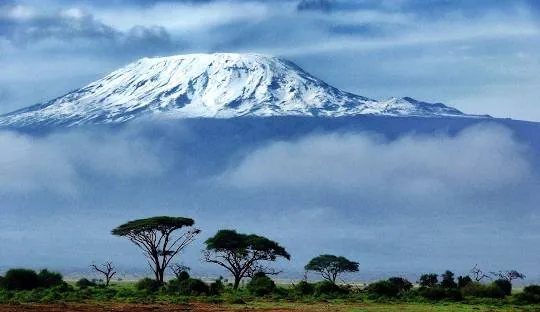
Kilimanjaro National Park Photos
What Wildlife Lives in the Park?
Wildlife on Kilimanjaro lives mostly in the lower rainforest. Black-and-white colobus monkeys and blue monkeys are the animals you are most likely to see on a day hike, along with forest birds such as turacos and hornbills.
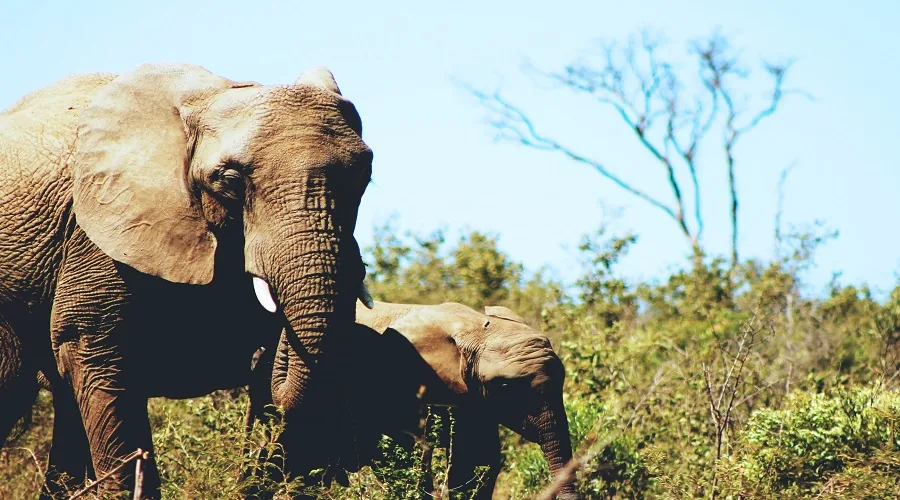
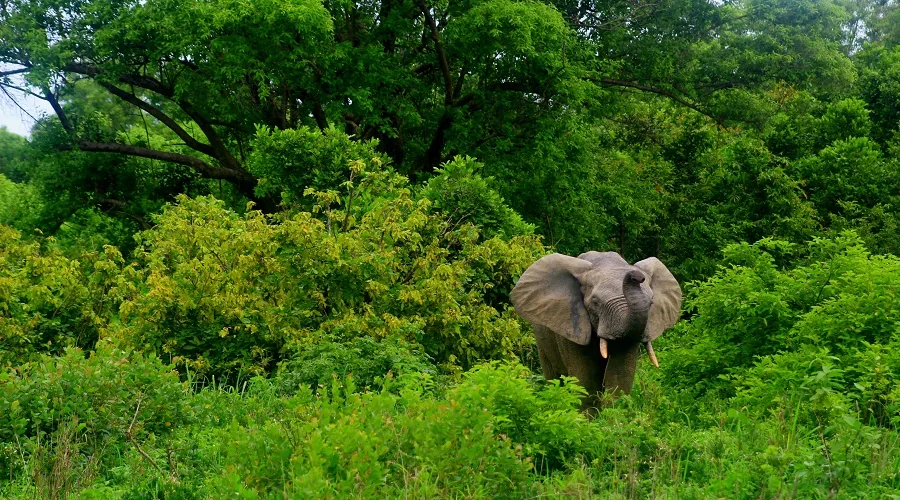
Elephants, buffaloes, leopards, bushbucks and duikers also live in the park, but they are shy and rarely seen on the trails. Higher up, wildlife thins out to birds such as white-necked ravens and small mammals. If seeing big game is your priority, combine your visit with a day safari.
Kilimanjaro Day Hike to Mandara Hut
The Kilimanjaro day hike follows the Marangu Route from Marangu Gate through the rainforest to Mandara Hut at about 2,720 m and back, with lunch at the hut. It suits travellers who want to walk on Kilimanjaro without a multi-day climb, and it is a good warm-up before a safari.
| Approximate time | What happens |
|---|---|
| 7:30–8:00 am | Pickup from your hotel in Moshi; earlier from Arusha |
| 9:00 am | Arrive at Marangu Gate; your guide completes the park registration |
| 9:30 am–1:00 pm | Hike about 8 km through the rainforest to Mandara Hut, looking for colobus monkeys |
| 1:00–2:00 pm | Packed lunch at Mandara Hut; optional short walk towards Maundi Crater if time allows |
| 2:00–5:00 pm | Descend to Marangu Gate |
| 5:00–7:00 pm | Drive back to your hotel |
It is a long day of about 16 km of walking, with around 860 m of ascent and descent, on a trail that can be muddy. You need reasonable fitness but no climbing experience.
How Much Does the Day Hike Cost?
The Kilimanjaro day hike costs from $245 per person, with the same price for groups of one to six. It includes park fees, a licensed guide, transport, a packed lunch and drinking water. Contact us to confirm the price for your date.
What Is Included in the Day Hike?
Return transport between your hotel in Moshi or Arusha and Marangu Gate
A licensed English-speaking mountain guide
Kilimanjaro National Park entry fees for the day
Packed lunch at Mandara Hut
Bottled drinking water
Government taxes
What Is Not Included?
Tips for your guide
Other drinks and snacks
Travel insurance
Personal expenses
International flights and Tanzania visa
When Is the Best Time to Visit?
The park is open year-round. The driest months, January to mid-March and June to October, give the clearest views of the summit and the easiest trails.
| Season | Months | What to expect |
|---|---|---|
| Short dry season | January to mid-March | Generally dry and clear, with cold summit nights and a chance of snow near the top. A popular climbing window. |
| Long rains | Late March to May | The wettest period, with muddy forest trails and limited views. Fewer climbers; climbing is possible but more demanding. |
| Main dry season | June to October | Dry and usually clear, with the coldest nights. The busiest period, especially July to September. |
| Short rains | November | Afternoon showers are common, with quieter trails. |
| Holiday season | December | Drying out again, but busy over Christmas and New Year. |
What Should You Bring on the Day Hike?
- Comfortable hiking boots or sturdy trail shoes
- A waterproof jacket, because the forest is often wet
- A warm layer for the cooler air at Mandara Hut
- Sun hat, sunscreen and sunglasses
- A small daypack with water and snacks
- Camera and binoculars for monkeys and birds
- Passport, as details are recorded at the gate
Day Hike or Full Climb?
A day hike shows you the rainforest and the lower mountain in a single day. To reach the summit, you need a multi-day climb of five to eight days. The table compares our climbing packages.
| Package | Sleeping | Acclimatisation | Difficulty | From |
|---|---|---|---|---|
| 5-Day Marangu | Huts | Limited: no acclimatisation day | Moderate, but altitude gained quickly | $1,600 |
| 6-Day Marangu | Huts | Good: rest day at Horombo | Moderate | $1,845 |
| 6-Day Machame | Tents | Good: climb high to Lava Tower, sleep low | Challenging | $1,845 |
| 7-Day Machame | Tents | Very good: extra night at Karanga | Challenging, steadier pace | $2,090 |
| 7-Day Lemosho | Tents | Very good: gradual western approach | Moderate to challenging | $2,090 |
| 8-Day Lemosho | Tents | Excellent: the most gradual of our routes | Moderate to challenging, slowest pace | $2,335 |
Kilimanjaro National Park FAQs
Kilimanjaro Planning Guides
- All Kilimanjaro Climbing Packages
- Marangu vs Machame vs Lemosho: Which Route Is Best?
- Kilimanjaro Summit Success: How to Improve Your Chances
- How to Train for Kilimanjaro: 12-Week Plan
- What to Pack for Kilimanjaro: Complete Gear List
- After the Climb: 2-Day Arusha & Tarangire Safari
- After the Climb: Zanzibar Day Tours